About me

Showing posts with label displays. Show all posts

Wednesday, 1 August 2012

Classroom displays - the learning journey

A few years ago I decided that it was important to show how the teaching and learning in my classroom integrated many different curriculum areas. This meant moving away from having designated maths, writing and reading areas framed with different borders. This was a big change for me because I had traditionally always had a wall for writing, a wall for maths, a wall for reading and a wall for art.

How is the learning journey displayed in your classroom?


Displays are a powerful thing. I recently attended a lecture by Guy Claxton, where he challenged the audience to think about what we were displaying in our classroom. He spoke about displaying authentic work that demonstrates the learning process for example draft writing. Guy Claxton believes it is important for children to see what good learners do and that mistakes are a normal part of learning.

Monday, 30 July 2012

What is a project?

A project can be initiated by the teachers or the children
A project may start from 'requirements' i.e. everybody is studying the Olympics
A project may start with the seed of an idea or provocation

A project may involve just a group of children or the whole class
A project may be connected to other things
A project may start and be heading in a certain direction and then go off on other tangents
Sometimes you may not know where a project is going - this a good thing!

A project will have a big idea or concept behind it
A project caters for different levels and abilities
A project should spark more questions, more inquiry, more research
A project evolves and grows
A project will be open ended


Wednesday, 25 July 2012

Where to start? Tinkering and Tweaking

The way I began tinkering and tweaking my practice to align more with the Reggio Emilia approach to teaching and learning, was to look at our inquiry topic for the term.

Is there another way?

An example of how I thought about our inquiry topic:

Our team had chosen "space - planet earth and beyond" for all the classes to study for the term. I decided that instead of presenting the children with the topic of "space", I would go from a concept base. The concept I thought would work well was 'change' and from there I presented the children with the question "What changes can we see around us?"

The children came up with many ideas such as losing baby teeth (they were 5 and 6 years old). They also noticed the seasonal change outside - it was autumn. They also noticed the change of day and night. Over the term we explored these three aspects of change. I met all of the curriculum requirements just like every other teacher in the team, however my investigations were child led, concept based, thought provoking, based on the childern's interests and were my first tentative steps in embracing the Reggio Emilia approach to teaching and learning.


Monday, 23 July 2012

Aesthetics of the Learning Environment

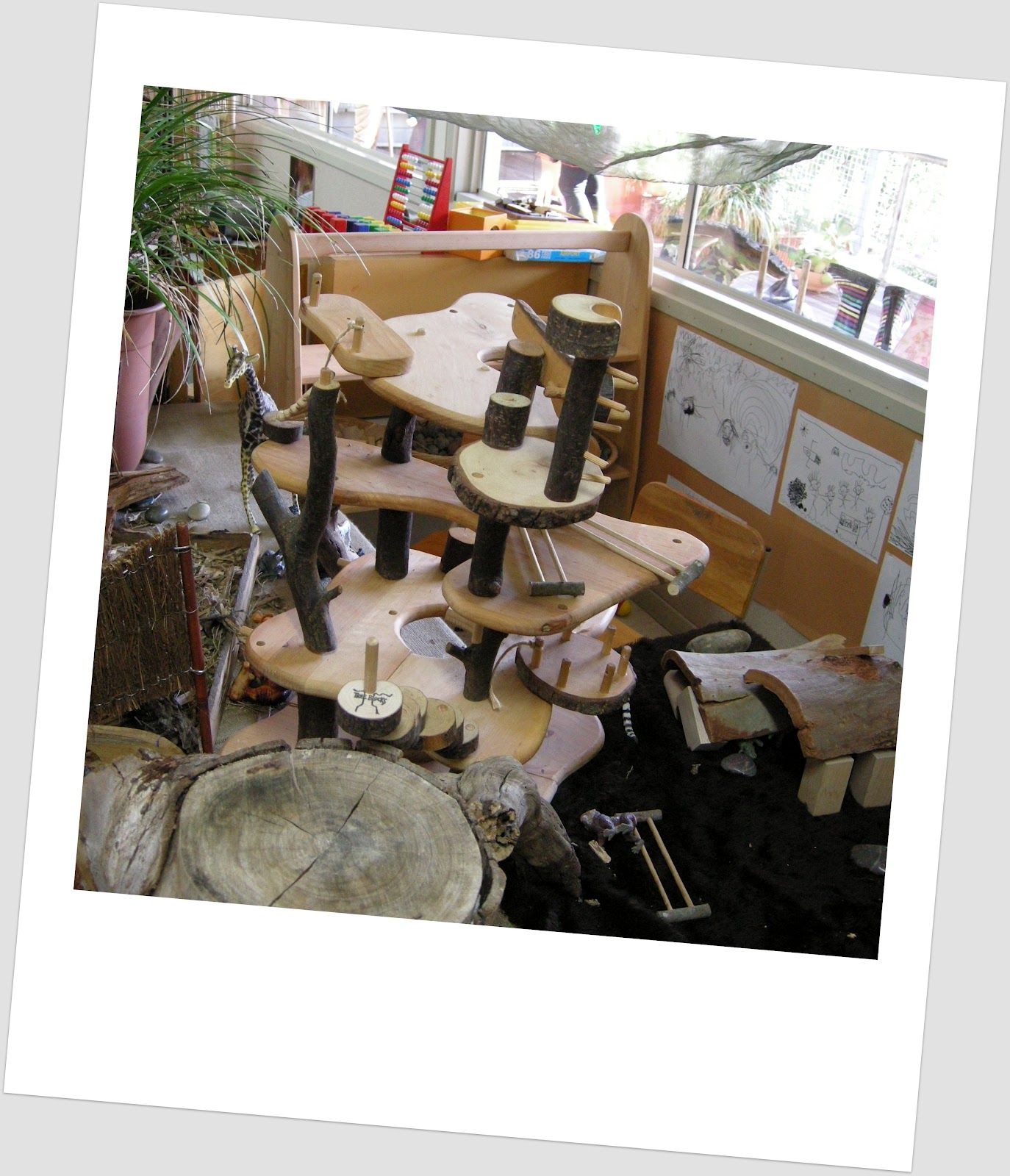
In Reggio Emilia the environment is seen as the third teacher. My interpretation of this is to look at how spaces can be organised to inspire and engage children in learning. How am I setting up learning experiences for the children? How are materials or resources organised? What is available and accessible for the children? What do we value as a learning community and how is this portrayed in our space? I believe it is important to purposefully design the learning environment.


One of the first ways I changed the organisation of materials in my class was to organise my art materials by colour. I sorted all of the coloured pencils and felt pens into containers based on their colour. It makes accessing the materials easier for the children, as does keeping it tidy, but it also inspires them to see all of the shades of red or yellow. This way of organising art materials also enables the children to carefully think about what colours they want to use in their work.