Sunday, 6 July 2014
Bloglovin
<a href="http://www.bloglovin.com/blog/7140445/?claim=c33xc3ue8w3">Follow my blog with Bloglovin</a>

Thursday, 3 April 2014
What is documentation?
This is such a huge question that I am not going to attempt to unpack it all in one post! There are many more experienced educators than I, who spend years researching and investigating this area.
In this post I will simply outline in layman's terms what I have seen as documentation in the 4 years I have been inspired by this approach. The main purpose of documentation is to make the process of learning visible. Documentation is not necessarily concerned with the 'end product' although this can be a part of the documentation.
1. Children's conversations/quotes. This deserves a post (or many!) all to its self. By recording the children's conversations or quotes you are giving visibility to the process of their thinking and learning. What are they thinking? How do they engage in conversation with others? What are they wondering about? How are they building understanding together? How are they hypothesising? How are they problem solving? Negotiating? How are they developing relationships with others? How are they developing relationships with the world around them?
2. Photographs/video. I take approximately 50 photos per day. Sometime this is still not enough. Again I will address this area in whole series of posts later on. The purpose of photographs is to give visibility to the children actively constructing their own understanding.
3. Graphic representations. This is a fancy term for the children's drawings. The children are provided with the opportunity to draw their thinking, for example "How could I measure the length of this space?". Depending on the age/ability of the children these drawings may be accompanied by the children's writing.
4. 3D models. Like graphic representations but in 3D form, often using clay, paper or wire.
These forms of on-going documentation can be made visible in the classroom on a daily basis. For example learning centres/areas that display conversations or quotes. Often we will leave out clay, wire or paper work that they children are developing to give visibility to their learning process. Similarly photos and graphic representations can be displayed daily for visitors to our classroom.
Bringing it all together
The school I currently work at uses photoshop, indesign and keynote. I had no idea how to use any of these programs before I started there, so it's been a big learning curve. We are lucky enough to have the resources to create panels similar to those seen in Reggio Emilia. These panels can be aimed at the adult community of the school or at the children. Panels are a great way to make visible key areas of the evolution of the project as the children are working.
Teachers are also expected to create two presentations using keynote (similar to powerpoint) to summarize the learning experiences for the year. One presentation is solely about project. The second is about the identity and experiences of the children in all other aspects of the program including literacy and numeracy. Both presentations are given at the end of the year to the parent community to summarize the learning experiences.
Some examples of "end products" that reflect the children's learning;
In this post I will simply outline in layman's terms what I have seen as documentation in the 4 years I have been inspired by this approach. The main purpose of documentation is to make the process of learning visible. Documentation is not necessarily concerned with the 'end product' although this can be a part of the documentation.
1. Children's conversations/quotes. This deserves a post (or many!) all to its self. By recording the children's conversations or quotes you are giving visibility to the process of their thinking and learning. What are they thinking? How do they engage in conversation with others? What are they wondering about? How are they building understanding together? How are they hypothesising? How are they problem solving? Negotiating? How are they developing relationships with others? How are they developing relationships with the world around them?
2. Photographs/video. I take approximately 50 photos per day. Sometime this is still not enough. Again I will address this area in whole series of posts later on. The purpose of photographs is to give visibility to the children actively constructing their own understanding.
3. Graphic representations. This is a fancy term for the children's drawings. The children are provided with the opportunity to draw their thinking, for example "How could I measure the length of this space?". Depending on the age/ability of the children these drawings may be accompanied by the children's writing.
4. 3D models. Like graphic representations but in 3D form, often using clay, paper or wire.
These forms of on-going documentation can be made visible in the classroom on a daily basis. For example learning centres/areas that display conversations or quotes. Often we will leave out clay, wire or paper work that they children are developing to give visibility to their learning process. Similarly photos and graphic representations can be displayed daily for visitors to our classroom.
Bringing it all together
The school I currently work at uses photoshop, indesign and keynote. I had no idea how to use any of these programs before I started there, so it's been a big learning curve. We are lucky enough to have the resources to create panels similar to those seen in Reggio Emilia. These panels can be aimed at the adult community of the school or at the children. Panels are a great way to make visible key areas of the evolution of the project as the children are working.
Teachers are also expected to create two presentations using keynote (similar to powerpoint) to summarize the learning experiences for the year. One presentation is solely about project. The second is about the identity and experiences of the children in all other aspects of the program including literacy and numeracy. Both presentations are given at the end of the year to the parent community to summarize the learning experiences.
Some examples of "end products" that reflect the children's learning;
- books created by the children
- 3D models
- maps
- role plays
- dance
And many more!!!!!
What small change can I make today?
At school we've had a term of professional development in the area of literacy, covering specifically two aspects; handwriting and spelling.
All this new learning is exciting but can be overwhelming and leaves me thinking "where do I start?!"
To break it down and make it more manageable I try and think "what small change can I make tomorrow?" I'm not the first to think this!
All this new learning is exciting but can be overwhelming and leaves me thinking "where do I start?!"
To break it down and make it more manageable I try and think "what small change can I make tomorrow?" I'm not the first to think this!
The journey of a thousand miles begins with one step.
Lao Tzu
Then I can begin to think about what I am going to do the next day, and the day after that, and after that, until new practises have been formed. I find that this strategy really works and stops me from thinking "It's too much! I can't do it!"
Nobody expects your practice to change overnight, but I do believe it is critical to be constantly reflecting and improving my pedagogy through personal and school directed professional development.
Nobody expects your practice to change overnight, but I do believe it is critical to be constantly reflecting and improving my pedagogy through personal and school directed professional development.
Saturday, 1 March 2014
Aesthetics of the learning environment - the value of calmness
In many Reggio Emillia inspired centres that I have visited
the value of calmness is very apparent in their environment, thus creating a
calm space for children to interact with.
Decisions from the colour of furniture, to wall coverings,
to what is put on the wall and display tables often reflect this value of
calmness.
One school I worked at had neutral colours and wall coverings.
The overall effect was calming but it also ensured that the children’s work was
not competing with bright colour backgrounds and boards.
Another school I worked at encouraged teachers to think very
carefully about what they were displaying, how and why they were displaying it.
Creating a soothing calm learning environment was a high priority.
When I first started teaching, 11 years ago, one of my
favourite tasks was creating wall displays. Layer upon layer of colour,
boarders and children’s work all competed for audience attention. Looking back
I cringe at the visual chaos that was going on in my classroom. I hope that now
I am a lot more thoughtful about the
aesthetics and visual impact my environment has.
Here are some inspiring pictures of calming environments;


2013/2014 Project Planning - A year long focus 'The City'
There are many different approaches to project planning. The two approaches I have experienced are; term by term with specific curriculum areas to
be covered in the project. For example in Term 2 we are focusing on the 'Arts' curriculum which will drive your project.
· The second approach I have been involved in is a year long project and curriculum areas are integrated at discretion of teacher, but the expectation is that by the end of the year all curriculum areas have been covered.
This year, 2013/2014, we are following a year long project
approach. Our umbrella topic for Year 1 is ‘The City’ which is a great concrete topic for this age level, also applicable as we live in the city!
While we don’t follow a direct ‘model’ of inquiry, there is
naturally a general order to how things flow. In the initial stage of the
inquiry we are gathering the children’s ideas about the topic of 'the city'.
There are many ways we set up provocations; sometimes through direct questioning, questions
to think about for show and tell i.e. bring in a photo of something you see in
the city, looking at books, and pictures. This stage is the perhaps the
trickiest stage because there are so many possibilities with the direction the
project can go in. Careful consideration of the children’s ideas, theories,
hypotheses and opinions give pathways forward. The children's ideas are gathered through the recording of their conversations, photographs and graphic representations of their thinking.
We reflect upon the children's ideas and think about the educational value of what we are doing; Why are we doing
this? And what do we want the children to
learn? We are also looking for concepts as opposed to specific knowledge
objectives. A concept might be 'diversity' vs a specific knowledge objective ' identify physical elements in a city'. We brainstorm possible concepts and use this as a 'road map’ to help guide us in our decision making and planning.
Wednesday, 13 November 2013
A twist on a standard topic - All about me!
At the beginning of every school year, across the country and quite probably the world, Teachers are preparing their first unit of study - All about me! The purpose of course; to get to know the new class. My experience has been, until recently, that the same unit was pulled out (dusted off) and presented in day by day stages. This unit typically would also be used to assess the children's ability to read, write and draw within the first few days of school.
In the second week of school we asked the children to bring in photos of their experiences. I shared two photos showing my big move to Bangkok and the children had the opportunity to share theirs. I asked each child to share with the rest of the class their
experiences. This is where things went a bit awry. While some of the children
were happy and confident to share their experiences in front of a group, many
of them clammed up when it was their turn and I ended up having to ask alot of
questions to encourage the more reserved children to share. This did not
encourage an open dialogue with the rest of the group, and didn't spark much
further discussion.
Last month I started work at a Reggio inspired school in Bangkok. I would like to offer the perspective the school has taken and the twist on this project.
Firstly there is a great focus on relationships and relationship building. This focus has guided protocol and policy making, for example there is no formal assessment within the first 3 weeks of school. The understanding being that children need time to settle in school after a long summer break and to feel comfortable in their new surroundings and with their new teacher.
Secondly, that this project All about me is not to be used primarily for assessment purposes. Yes, as a teacher you may observe things but there is not the expectation of having the children sit down on day 1 and recount their summer holiday in writing. The primary purpose of this project is to get to know the children, to really get to know them.
As a group of teachers we spent some time thinking about how we were going to launch this first project. We discussed possible questions and reflected upon the fact that while most children would have travelled outside of Bangkok for their summer, some would have stayed at home. We didn't want to exclude these children or make them feel like their experience was lesser because they hadn't gone away. This value of inclusiveness influenced the types of questions we decided to ask the children. We felt that asking "what have you been doing in your time away from school?" was more appropriate than "Where did you go in your holiday?" We also thought that there may be some confusion about terminology for example a word 'holiday' for Americans means Thanksgiving or Christmas, whereas for Europeans is means a break. Working at an international school means we need to consider these things.
We also decided that it would be important as teachers to share our own experiences with the children, and through this modelling we could focus on various aspects such as an emotional reflection about an experience.
At the end of the second week I shared my disappointment about how our
sharing had gone with the other teachers. I realised that a whole class forum was not the way to
encourage discussion at this early stage of the year. Moving forward I decided that we needed to revisit these holiday experiences in smaller groups to encourage relationship building and more in depth dialogue and interaction.
I appreciated the emphasis on using this provocation as a springboard into our project work and the time the children were encouraged to take to truly explore this concept of 'identity'.
I appreciated the emphasis on using this provocation as a springboard into our project work and the time the children were encouraged to take to truly explore this concept of 'identity'.
Tuesday, 27 August 2013
What is a project - time
Time
A project has not limits of boundaries in terms of how it might develop. Be open to a project continuing on from the term before. I have let go of the mentality that it's a new term therefore we need a new project. Some projects are very meaty!
A project will have an ebb and flow to it, some days or weeks the children will be really excited or engaged, and other times they will be less so.
There may be some projects that all of the children are engaging in at one time. There also maybe multiple projects running at the same time. When I first began my Reggio inspired journey and reflecting upon my own practice it was inconceivable to me to run more than one project at a time, so all of the children were involved in one project. However, after a few years of reflection and changes made to my practice I feel confident and comfortable in running multiple projects.
Some projects may spark 'mini' projects that are connected to the main project.
The project work is fully integrated into the classroom programme which means I don't have allocated 'project time' in my day (traditionally most classrooms would have inquiry learning after lunch). In my classroom children may be engaged in the project throughout the day, and then see me for targeted teaching in reading, writing and maths.
A project has not limits of boundaries in terms of how it might develop. Be open to a project continuing on from the term before. I have let go of the mentality that it's a new term therefore we need a new project. Some projects are very meaty!
A project will have an ebb and flow to it, some days or weeks the children will be really excited or engaged, and other times they will be less so.
There may be some projects that all of the children are engaging in at one time. There also maybe multiple projects running at the same time. When I first began my Reggio inspired journey and reflecting upon my own practice it was inconceivable to me to run more than one project at a time, so all of the children were involved in one project. However, after a few years of reflection and changes made to my practice I feel confident and comfortable in running multiple projects.
Some projects may spark 'mini' projects that are connected to the main project.
The project work is fully integrated into the classroom programme which means I don't have allocated 'project time' in my day (traditionally most classrooms would have inquiry learning after lunch). In my classroom children may be engaged in the project throughout the day, and then see me for targeted teaching in reading, writing and maths.
Tuesday, 9 July 2013
Thought encouraging questions to ask children
How do you know?
How could we check?
Could you give me more details?
How could we explain this?
How is this the same or different?
What is a different idea?
What is an example of that?
What ideas/thoughts do you have?
What is a new idea?
What if...?
What are some different possibilities?
What questions could we ask?
What did we learn?
What could we do differently?
What could we change?
How could we check?
Could you give me more details?
How could we explain this?
How is this the same or different?
What is a different idea?
What is an example of that?
What ideas/thoughts do you have?
What is a new idea?
What if...?
What are some different possibilities?
What questions could we ask?
What did we learn?
What could we do differently?
What could we change?
Monday, 24 June 2013
The art of questioning
What is a question?
"Everything. It is a way of evoking stimulating response or stultifying inquiry. It is in essence the very core of teaching." John Dewy
What are we asking questions for?
What type of questions are we asking?
Most teachers would agree that we ask questions of children for the following reasons;
"Everything. It is a way of evoking stimulating response or stultifying inquiry. It is in essence the very core of teaching." John Dewy
What are we asking questions for?
What type of questions are we asking?
Most teachers would agree that we ask questions of children for the following reasons;
- to further children's understanding
- to stimulate thinking
- to help children co-construct meaning
- to promote children's collaboration with their peers
Art resources - what are we using and why
Critiquing the resources we give children and why we give them to them
Paint
One day while my children were using the paint, it dawned on me they were becoming increasingly frustrated wth this medium because they wanted to show intricate details in their work but the paint was not allowing for this. Paint can be clumsy and sloppy until children have the understanding behind the process of painting i.e. painting in layers, allowing each layer to dry before adding the next part. It is important to teach them how to hold a paint brush correctly, and to expose them to varying sizes of brushes so they are able to paint finer detail. We talk about the reasons for choosing certain brushes for example a big brush is good for painting the background because it covers a larger area more quickly than a fine brush.
Pens
In my class the children have a selection of ink pens that they can use when outlining their artwork. We had a series of mini lessons where we discussed the pens and the types of lines they could produce depending on the tip of the pen and then what we might think of when choosing each type of pen. For example a 'whispering' pen is a fine tipped pen and is great for delicate detail such as eye lashes, whereas a 'shouting' pen is great for big outlines like hair.
Paint
One day while my children were using the paint, it dawned on me they were becoming increasingly frustrated wth this medium because they wanted to show intricate details in their work but the paint was not allowing for this. Paint can be clumsy and sloppy until children have the understanding behind the process of painting i.e. painting in layers, allowing each layer to dry before adding the next part. It is important to teach them how to hold a paint brush correctly, and to expose them to varying sizes of brushes so they are able to paint finer detail. We talk about the reasons for choosing certain brushes for example a big brush is good for painting the background because it covers a larger area more quickly than a fine brush.
Pens
In my class the children have a selection of ink pens that they can use when outlining their artwork. We had a series of mini lessons where we discussed the pens and the types of lines they could produce depending on the tip of the pen and then what we might think of when choosing each type of pen. For example a 'whispering' pen is a fine tipped pen and is great for delicate detail such as eye lashes, whereas a 'shouting' pen is great for big outlines like hair.
Sunday, 16 June 2013
Listening - what does this mean?
"We have always maintained that children have their own questions and theories, and that they negotiate the theories with others. Our duties as teachers is to listen to the children, just as we ask them to listen to one another. Listening means giving value to others, being open to them and what they have to say. Listening legitimizes the other person's point of view, thereby enriching both the listener and the speaker. What teachers are asked to do is create contexts where such listening can take place."
Carla Rinaldi cited in Edwards, Gandini and Forman (1998)
How do we authentically listen to children?
Listening is not just about listening with your ears, it is about listening with all of your senses. Through listening with all of your senses you will be able to discover provocations for projects and direction in existing projects. Listening with all your senses is not easy. There are many things that stand in the way of authentically listening to children, for example, your values, pre-conceived ideas, assumptions, biases, 'rules' etc etc Listening is not about producing answers for children, rather it formulates more questions. These things challenge us when we try to listen to children.
I recently listened to a presentation by a fellow educator who felt challenged by what the children were 'telling' her. A group of boys in her group loved the cartoon character, Ben 10, they would bring in small figurines and re-inact the cartoon in the classroom. At first she tried to resist this interest and stop the play through 'rules'. Then she realised that the children valued this play and that she wasn't really listening to them. Based on this realisation she changed her tact and embraced this play, encouraging the boys to draw pictures, create sets and props using clay and cardboard, and re-inact the story lines. This developed into a project for the children.
I see my role as an educator to listen, recognise, support, challenge, extend children's thinking and theories by creating an environment where this is valued.
Carla Rinaldi cited in Edwards, Gandini and Forman (1998)
How do we authentically listen to children?
Listening is not just about listening with your ears, it is about listening with all of your senses. Through listening with all of your senses you will be able to discover provocations for projects and direction in existing projects. Listening with all your senses is not easy. There are many things that stand in the way of authentically listening to children, for example, your values, pre-conceived ideas, assumptions, biases, 'rules' etc etc Listening is not about producing answers for children, rather it formulates more questions. These things challenge us when we try to listen to children.
I recently listened to a presentation by a fellow educator who felt challenged by what the children were 'telling' her. A group of boys in her group loved the cartoon character, Ben 10, they would bring in small figurines and re-inact the cartoon in the classroom. At first she tried to resist this interest and stop the play through 'rules'. Then she realised that the children valued this play and that she wasn't really listening to them. Based on this realisation she changed her tact and embraced this play, encouraging the boys to draw pictures, create sets and props using clay and cardboard, and re-inact the story lines. This developed into a project for the children.
I see my role as an educator to listen, recognise, support, challenge, extend children's thinking and theories by creating an environment where this is valued.
Sunday, 9 December 2012
2012 Project - An investigation into Roundness
In this post I would like to give some background as to how this project and investigation into 'roundness' evolved.
In term 2 the Junior School were given the directive to produce a school show. The theme for the show was the 'Olympics' as it was topical at the time. Each class was asked to choose a country and to produce a dance item that reflected their culture of their country of choice.
I decided that our class would choose China as our country. I spent sometime researching on the internet about Chinese classical dance. Dance is not a strength of mine so I really wanted to find out what sort of movements they used in Chinese classical dance. In the course of my research I came across the Shen Yun which had a short promotional video. The company had interviewed dancers and had asked them to explain the underlying principles of Chinese classical dance. One of the concepts in Classical Chinese Dance that stood out to me was that of the roundness of movements, as opposed to ballet where the movements are quite straight.
Because I believe in child centered learning and that they are capable learners, I wanted the children to be involved as much as possible in the process of choreographing the dance. I decided this concept of roundness would provide an excellent foundation for our dance.
In visual art we looked at the artist Friedensreich Hundertwasser. The children created their own Hundertwasser inspired art.
Over the term we explored this concept of roundness through a variety of ways including visual art, language, construction, and of course dance!
In visual art we looked at the artist Friedensreich Hundertwasser. The children created their own Hundertwasser inspired art.
We used wire, pebbles and the OHP to explore the question ‘What is a line?’ We built up a visual concept of ‘roundness’ the children so the could start thinking about demonstrating 'roundness' with their bodies.
Through our exploration of roundness the children began building a bank of rich descriptive words such as; swirly, twirly, bumpy, wiggly, spirally, twisty, squiggly, jiggly to describe the movement of their bodies.
The children had been watching alot of the Olypmic games at home and so these conversations flowed into the classroom. Some of them where aware that the Olympics were in London which the children were keen to locate on a map. Other children in the class had travelled recently and were also aware of where they had been. This sparked an investigation into maps. I found various types of maps for the children to look at for example a map of the world, a map of New Zealand and a map of Auckland. This led to discussions about perspective and a 'bird's eye view'.
I organised the children into 3 groups and they had to collaboratively choreograph their dance and then record these movements from a bird's eye view. Some of the children found it challenging and frustrating to work in a group to design their dance, so there was alot of negotiating and problem solving that we as teachers supported the children through.
I organised the children into 3 groups and they had to collaboratively choreograph their dance and then record these movements from a bird's eye view. Some of the children found it challenging and frustrating to work in a group to design their dance, so there was alot of negotiating and problem solving that we as teachers supported the children through.
The value of recycling and sustainability
How do we show children we value recycling and sustainability?
I strongly value recycling so the children are encouraged to bring in things from home for us to use at School. For example cardboard boxes, glass jars, wrapping paper, ribbon, card etc
We have regular conversations about how we can use things in a beautiful or useful way again. I think there is a lot of value in children looking at things that we would normally throw away and imagine the many possibilities beyond its current use.
It also means that we are able to reduce our classroom costs because instead of buying these materials to use in projects, we collect them. I also try and look for things that can be used as storage containers in the classroom for example glass jars instead of buying them from the shops.
Transforming things that might have normally been thrown away, or that are ugly/broken, creates a sense of beauty amongst children. One such project that evolved in my classroom was centered around a horrible cheap plastic chair that we had inherited as a 'birthday chair'. Not content with using this chair I challenged the children to beautify the chair. The detail in their designs was breath-taking and we settled on using elements of each child's design in the chair. The children then set about transforming the chair using papier mache, wire and cardboard. They completed the chair by painting it. It truly is a birthday throne which the children cherish and adore sitting in when it's their birthday!


I strongly value recycling so the children are encouraged to bring in things from home for us to use at School. For example cardboard boxes, glass jars, wrapping paper, ribbon, card etc
We have regular conversations about how we can use things in a beautiful or useful way again. I think there is a lot of value in children looking at things that we would normally throw away and imagine the many possibilities beyond its current use.
It also means that we are able to reduce our classroom costs because instead of buying these materials to use in projects, we collect them. I also try and look for things that can be used as storage containers in the classroom for example glass jars instead of buying them from the shops.
Transforming things that might have normally been thrown away, or that are ugly/broken, creates a sense of beauty amongst children. One such project that evolved in my classroom was centered around a horrible cheap plastic chair that we had inherited as a 'birthday chair'. Not content with using this chair I challenged the children to beautify the chair. The detail in their designs was breath-taking and we settled on using elements of each child's design in the chair. The children then set about transforming the chair using papier mache, wire and cardboard. They completed the chair by painting it. It truly is a birthday throne which the children cherish and adore sitting in when it's their birthday!


Tuesday, 14 August 2012
Materials available in the classroom
What choices are we making and why? The materials that we choose to have available to the children reflect our image of the child. If we believe children are capable, what resources are we providing them with?
In my classroom the children have access to a variety of materials such as clay, wire, recycled materials, and a variety of other open ended resources for them to express their ideas with.
I have a strong sense of sustainability and recycling, so there are many different types of materials that are collected and available to the children.

 Children are given time to explore many different types of materials in order that they will become familiar with the characteristics and properties of these materials. The children are then able to select the materials they want to use to represent their ideas.

In my classroom the children have access to a variety of materials such as clay, wire, recycled materials, and a variety of other open ended resources for them to express their ideas with.
I have a strong sense of sustainability and recycling, so there are many different types of materials that are collected and available to the children.


Thursday, 9 August 2012
What is a project? Curriculum perspective
Where is the project coming from? Is it something that the children have shown an interest in? Is it a requirement?
Why do you think this is an important project for the children?
A project encompasses core values, key competencies, habits of mind, building learning power skills etc A project's underlying objectives is to teach the children how to learn.
A project may challenge you as a teacher to let go of your pre-conceived ideas about where a project should be heading. Sometimes you have to let go of initial ideas that you had about a project.
My projects are not planned out from the beginning to the end. My project planning is a living document.
Some projects I have not known what the main curriculum focus would be because in the initial sates of the project I was still gathering information about the children's ideas and theories. One particular project that was sparked by the children's interest in butterflies could have a been a Science - living world project, however I discovered that most of the children already had a good understanding of the life cycle of a butterfly. My curriculum focus then became a Technology focus, with a minor focus on the life cycle.
Other projects like one that was sparked by our school show, had a clear arts focus from the start. However it did have a minor focus on social studies and geography as the children showed an interest in countries from around the world, maps, and atlases.
Being open to the possibilities is key for me - letting go of 'this is the way we have always done it'. I don't keep any unit plans from previous projects because each project is unique to the group of children I am working with at a particular point in time. There is documentation of the project (something I will talk about later) but I have moved away from replicating the same learning experiences year in and out.
Another big change inspired by this philosophy, has been not to teach themes for example it is autumn so we are all going to learn about autumn. I do still embrace these sorts of 'world around us' topics but the way the topics emerge is so different each year.
"Each individual can thus not only learn how to learn, but also become aware of the value of learning as a quality of life itself, in order to organise and multiply the learning opportunities as well as enjoy them and find pleasure in learning together with others." Carla Rinaldi


Monday, 6 August 2012
What is a provocation?
In the Reggio Emilia approach to teaching and learning the educators talk about provocations.
What is a provocation?
Provocations can come from the teachers, children or external sources such as the community. It is something that sparks questions, interest, ideas, theories, discussion, debate and engages the children's thinking.
Provocations could be:


What is a provocation?
Provocations can come from the teachers, children or external sources such as the community. It is something that sparks questions, interest, ideas, theories, discussion, debate and engages the children's thinking.
Provocations could be:
- A concept i.e. change
- A problem i.e. children touching chrysalises and damaging them
- An object i.e. a map
- Nature e.g. children's fascination with sticks
- A question from the teacher
- Questions from the children
- Song lyrics
- An event
- A book
- An interest that a child or group of children have
- A requirement i.e. the school show


Wednesday, 1 August 2012
Classroom displays - the learning journey
A few years ago I decided that it was important to show how the teaching and learning in my classroom integrated many different curriculum areas. This meant moving away from having designated maths, writing and reading areas framed with different borders. This was a big change for me because I had traditionally always had a wall for writing, a wall for maths, a wall for reading and a wall for art.
How is the learning journey displayed in your classroom?
Displays are a powerful thing. I recently attended a lecture by Guy Claxton, where he challenged the audience to think about what we were displaying in our classroom. He spoke about displaying authentic work that demonstrates the learning process for example draft writing. Guy Claxton believes it is important for children to see what good learners do and that mistakes are a normal part of learning.


How is the learning journey displayed in your classroom?
Displays are a powerful thing. I recently attended a lecture by Guy Claxton, where he challenged the audience to think about what we were displaying in our classroom. He spoke about displaying authentic work that demonstrates the learning process for example draft writing. Guy Claxton believes it is important for children to see what good learners do and that mistakes are a normal part of learning.


Monday, 30 July 2012
What is a project?
A project can be initiated by the teachers or the children
A project may start from 'requirements' i.e. everybody is studying the Olympics
A project may start with the seed of an idea or provocation
A project may involve just a group of children or the whole class
A project may be connected to other things
A project may start and be heading in a certain direction and then go off on other tangents
Sometimes you may not know where a project is going - this a good thing!
A project will have a big idea or concept behind it
A project caters for different levels and abilities
A project should spark more questions, more inquiry, more research
A project evolves and grows
A project will be open ended
.jpg)

A project may start from 'requirements' i.e. everybody is studying the Olympics
A project may start with the seed of an idea or provocation
A project may involve just a group of children or the whole class
A project may be connected to other things
A project may start and be heading in a certain direction and then go off on other tangents
Sometimes you may not know where a project is going - this a good thing!
A project will have a big idea or concept behind it
A project caters for different levels and abilities
A project should spark more questions, more inquiry, more research
A project evolves and grows
A project will be open ended
.jpg)
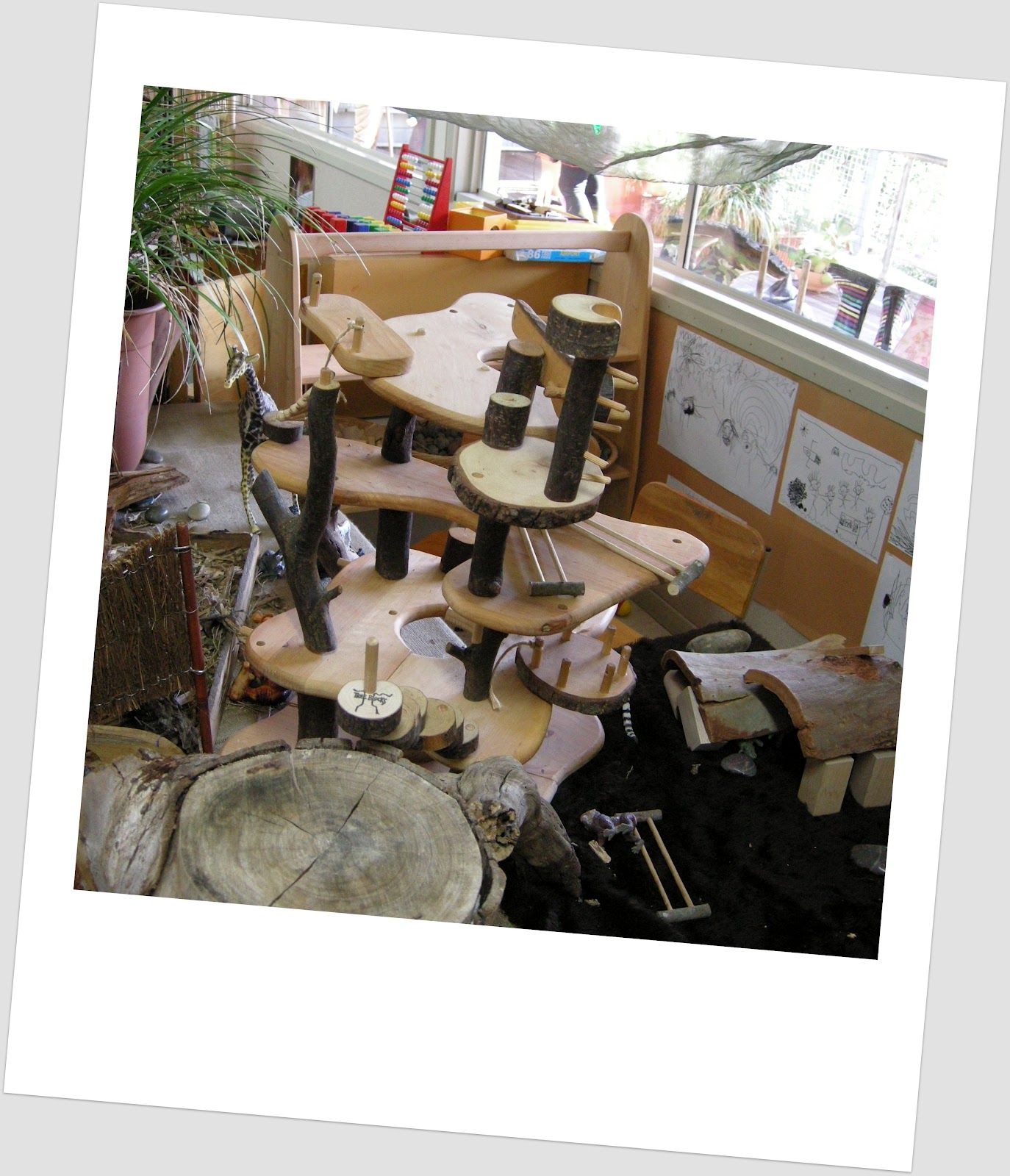
Wednesday, 25 July 2012
Where to start? Tinkering and Tweaking
The way I began tinkering and tweaking my practice to align more with the Reggio Emilia approach to teaching and learning, was to look at our inquiry topic for the term.
Is there another way?
An example of how I thought about our inquiry topic:
Our team had chosen "space - planet earth and beyond" for all the classes to study for the term. I decided that instead of presenting the children with the topic of "space", I would go from a concept base. The concept I thought would work well was 'change' and from there I presented the children with the question "What changes can we see around us?"
The children came up with many ideas such as losing baby teeth (they were 5 and 6 years old). They also noticed the seasonal change outside - it was autumn. They also noticed the change of day and night. Over the term we explored these three aspects of change. I met all of the curriculum requirements just like every other teacher in the team, however my investigations were child led, concept based, thought provoking, based on the childern's interests and were my first tentative steps in embracing the Reggio Emilia approach to teaching and learning.


Is there another way?
An example of how I thought about our inquiry topic:
Our team had chosen "space - planet earth and beyond" for all the classes to study for the term. I decided that instead of presenting the children with the topic of "space", I would go from a concept base. The concept I thought would work well was 'change' and from there I presented the children with the question "What changes can we see around us?"
The children came up with many ideas such as losing baby teeth (they were 5 and 6 years old). They also noticed the seasonal change outside - it was autumn. They also noticed the change of day and night. Over the term we explored these three aspects of change. I met all of the curriculum requirements just like every other teacher in the team, however my investigations were child led, concept based, thought provoking, based on the childern's interests and were my first tentative steps in embracing the Reggio Emilia approach to teaching and learning.


Monday, 23 July 2012
Aesthetics of the Learning Environment
In Reggio Emilia the environment is seen as the third teacher. My interpretation of this is to look at how spaces can be organised to inspire and engage children in learning. How am I setting up learning experiences for the children? How are materials or resources organised? What is available and accessible for the children? What do we value as a learning community and how is this portrayed in our space? I believe it is important to purposefully design the learning environment.
One of the first ways I changed the organisation of materials in my class was to organise my art materials by colour. I sorted all of the coloured pencils and felt pens into containers based on their colour. It makes accessing the materials easier for the children, as does keeping it tidy, but it also inspires them to see all of the shades of red or yellow. This way of organising art materials also enables the children to carefully think about what colours they want to use in their work.


One of the first ways I changed the organisation of materials in my class was to organise my art materials by colour. I sorted all of the coloured pencils and felt pens into containers based on their colour. It makes accessing the materials easier for the children, as does keeping it tidy, but it also inspires them to see all of the shades of red or yellow. This way of organising art materials also enables the children to carefully think about what colours they want to use in their work.


Subscribe to:
Posts (Atom)